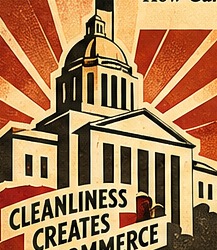
How can a city council turn a necessary public-health service into a source of lawful municipal revenue and new commercial opportunity? When densely populated cities and suburban centers require professional cleaning, the demand can support neighborhood porters, independent contractors, equipment makers, service coordinators, training programs and businesses that turn waste into recoverable resources.
A local mercantile and services exchange could connect family-owned operations with mid-sized contractors, while transparent procurement and licensing keep the market open. Public benefit might come through business activity, taxes, appropriately priced service fees and reduced avoidable sanitation costs - not private enrichment of council members.
Necessity creates demand. But does a new hygiene standard spread opportunity through the local economy, or concentrate contracts in a few hands?
TO PONDER:
How could small and mid-sized firms both enter the market?
What revenue should be reinvested in public health and cleaner infrastructure?
JOHN | OWNER OF ELECTROLIPS LLC | BERKELEY
MEDITATION II - FROM JOHN
The Human Cost of Waste Work
Exposure, recovery and the length of service
Original Art Deco-style meditation illustration
How long should anyone be assigned to work that repeatedly exposes them to human waste? A porter, restaurant employee or sanitation specialist may confront contamination, offensive odors, physical hazards and emotionally exhausting duties. Training and protective equipment matter; so do respect, agency, adequate staffing and the right to recover.
I propose two-year terms for designated high-exposure hygiene duties, with a maximum of four terms and at least two years between terms. This is a protective policy idea, not a medically established threshold. Research has not identified a universal number of years required for psychological recovery from restroom cleaning or fecal exposure.
If society depends upon the work, should it also guarantee the worker a route into another occupation, paid education, health monitoring and a stable life beyond the assignment?
TO PONDER:
What evidence would establish a reasonable exposure limit?
How can recovery mean opportunity rather than unemployment?
JOHN | OWNER OF ELECTROLIPS LLC | BERKELEY
MEDITATION III - FROM JOHN
A Fair Wage for Essential Cleaning
Three times, six times, and whose minimum wage?
Original Art Deco-style meditation illustration
Should essential hygiene work receive three times the minimum wage, six times the minimum wage, or a rate that changes according to the risk, the locality and the company receiving the service? The same work may be performed for a small suburban shop, a wealthy metropolitan business and a large commercial institution. Equal dignity does not erase the differences in exposure and economic capacity.
One proposal is a locally anchored base calculated from the applicable wage law where the work is actually performed, with a transparent 3-to-6-times premium informed by the client's average profitability over the previous four completed fiscal years. Contract rules would have to prevent false profit reports and guarantee the premium reaches the worker.
Does a wage reflect the difficulty of a task, its value to public health, or a business's ability to pay? Can a fair policy recognize all three without excluding small businesses?
TO PONDER:
Should the higher city or county legal minimum set the floor?
How should profit, risk and worker training influence the premium?
JOHN | OWNER OF ELECTROLIPS LLC | BERKELEY
MEDITATION IV - FROM JOHN
The Invisible Contract
Global labor, regulation and public accountability
Original Art Deco-style meditation illustration
When a New York business buys a service, how far does its responsibility reach? A contract may pass through agencies, subcontractors, distant suppliers and technology platforms before anyone performs the work. In that chain, the worker's actual pay, training and protections can become difficult for the public to see.
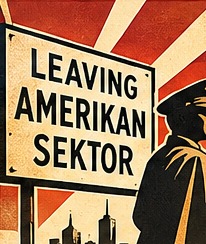
Should cities examine labor arrangements connected with lower-wage regions, including Myanmar (formerly Burma), without assuming that a worker's nationality determines their rights or conduct? What matters is whether the work is safe, the wage legal, and every company in the chain accountable for conditions where the service takes place.
Transparency should not be a slogan. It could mean auditable payroll, disclosed subcontracting tiers, verified safety training and clear responsibility when violations occur. How much of a city's economy can be understood only by following the contract?
TO PONDER:
Who is accountable when a subcontractor fails to pay correctly?
Can public procurement reward transparent local and international supply chains?
JOHN | OWNER OF ELECTROLIPS LLC | BERKELEY
MEDITATION V - FROM JOHN
The Day That Never Comes
Happiness, heritage, and the decision to act
Original Art Deco-style meditation illustration
What makes people happy in prosperous countries, and what happens to belonging when families, languages and communities are scattered across the globe? People who leave their countries through work, war, migration or economic pressure may carry a memory of home that cannot be measured by national income. A place can grow wealthier while its residents feel less secure or less connected.
A different future requires more than patience. To say that time will answer everything is to risk allowing the problem to become permanent. The work may begin with a cleaner street, a fair contract, a local business or an honest question asked in public. Constructive action can be firm without being violent.
Do we act now to improve a world we actually inhabit, or do we wait for an imagined day when everything is suddenly better - a day that may never come?
TO PONDER:
Can a city measure prosperity through belonging and well-being, not money alone?